

Did you know?
Climate change has accelerated spring’s arrival by around 8.4 days compared to the early 1900s.

Digital Content Manager
From land acquisitions to landmark research and the pitter patter of tiny, furry feet, we’ve achieved some truly great things for nature in 2025.
Positive news about nature and the environment can be hard to come by these days, so we’ve pulled together eight of our most inspiring achievements from the last 12 months to give you an end-of-year boost. And the best part? We wouldn’t have been able to do any of this work without our supporters – so our achievements are all down to you. Thank you!

Our work to protect and restore the UK’s temperate rainforests kicked up a notch this year when we bought 102-hectare (252-acre) Buckland Wood in Devon. This moist and mossy oakwood is bursting with potential, and thanks to donations amounting to more than £735,000, our supporters played a key role in helping us secure the £1.65 million purchase.
This wood is part of a growing corridor of protected rainforests in South-West England and, as we nurse it back to health, it will enrich the wider landscape as well as the wildlife within. Buckland is nestled between our Ausewell Wood and Grey Park Wood sites, helping to connect the habitats and improve climate resilience, water quality and carbon storage.
If that wasn’t enough, we’ve planted more than 300,00 trees at Gleann Shìldeag – our majestic West Highlands mountain which sits at the heart of Scotland’s rainforest – to expand the site’s ancient woodland. And down in Wales, we published a landmark report setting out a route map for rescuing 240 square miles of surviving rainforest habitat across the country.
Last summer we reintroduced 15 pine martens to Devon’s Dart Valley during an exciting reintroduction project. You can never predict just how successful these reintroductions will be, and this one exceeded all expectations as, this summer, trail camera footage revealed the first pine marten kits born in Devon for more than a century.

In 2025 we responded to more than 200 planning cases that would damage or destroy ancient woods and ancient and veteran trees. These included a successful legal challenge against Monmouthshire Council’s approval of two new poultry units on a farm that would have affected nearby ancient woodlands through nitrogen pollution.
We also began working alongside campaigners to explore options to overturn a decision by Scottish ministers to allow the development of a Flamingo Land theme park on the shores of Loch Lomond. The proposals were originally rejected by Loch Lomond & The Trossachs National Park Authority and will damage ancient woodland habitat. With just 2.5% of irreplaceable ancient woodland cover left in the UK, we need to preserve every precious patch.

It’s been a bumper year for land acquisitions, with 581 hectares (1,436 acres) brought into our care, including 195 hectares (481 acres) at Harrison Woodlands, an ancient wood recorded in the Domesday Book. We were able to rescue Harrison Woodlands in January thanks to £1 million in donations from our incredible supporters. Now, we can start restoring this neglected conifer plantation back to its broadleaved roots – thinning the dense, non-native conifers, managing the landscape for wildlife including nightingales, and opening up the site for people to visit.
Our other big buys spanned the UK. We also rescued:
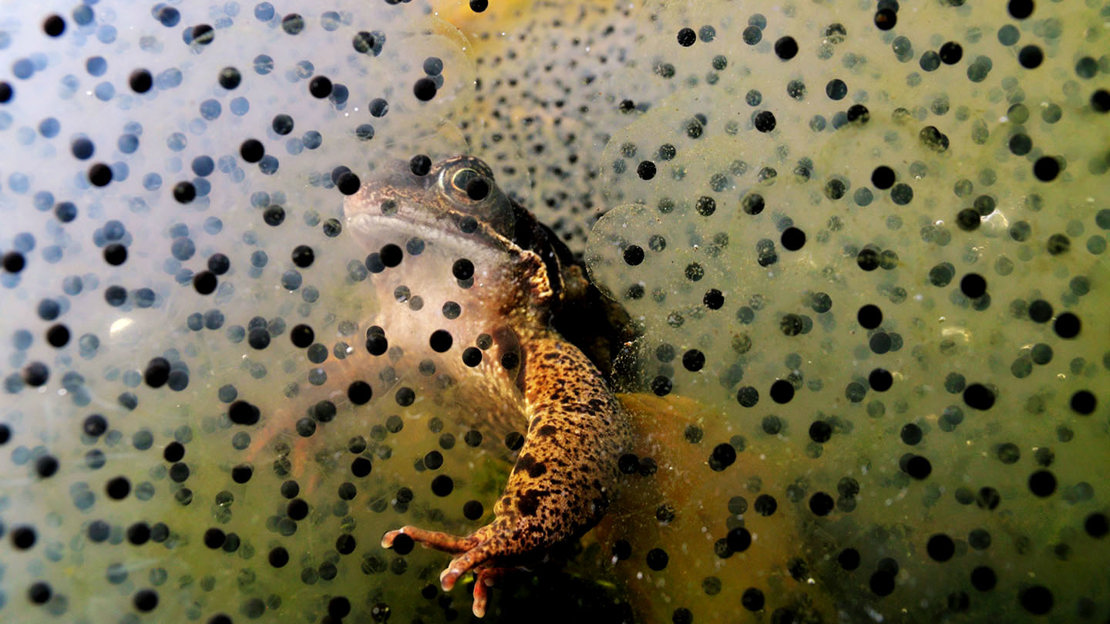
Climate change has accelerated spring’s arrival by around 8.4 days compared to the early 1900s.
From our woods to our gardens, it’s clear the climate crisis is having a profound impact on nature. So, in spring, we asked people across the UK to help us understand how wildlife is coping with shifting seasons, warmer temperatures and unpredictable weather patterns.
In total, almost 23,000 of you submitted your first sightings of three of spring’s vital signs: frog spawn, a singing song thrush and flowering blackthorn. The records revealed that, while frog spawn and song thrush trends followed the same pattern as the 20-year average, blackthorn flowered nine days earlier than usual. This was likely down to the record-breaking sunshine and warm temperatures in March – a worrying trend, as blackthorn blossom is a vital source of early nectar for insects emerging after winter. If climate change throws it’s timing out of sync, the effects can echo through the food chain.
In March we launched a new website: a nature emergency scorecard showing which local authorities have declared a nature emergency, the quality of the declaration and the likelihood of it leading to nature recovery. The website also offers practical guidance to help more local authorities make high quality declarations, and we’ve already had positive meetings with some of them about how they can support more action for nature recovery on the ground.

This year, we released the findings from our in-depth woodland wellbeing study, BIO-WELL, which posed the question: does a biodiverse woodland positively impact human health and wellbeing? In a word… yes! We compared woodland wellbeing maps based on natural traits known to enhance health and happiness (including birdsong and colourful fungi) against socioeconomic data, to investigate whether access to biodiverse woodland is equally distributed across the UK. We found that woods rich in wellbeing traits are very unevenly distributed, with lower wellbeing-quality woodlands located in more income-deprived areas. It’s a sobering result, but we’ll now use the woodland wellbeing maps to identify areas where woodland creation, restoration and protection can be prioritised to begin addressing the inequalities.
We also ran our DiversiTree project. Working in collaboration with the James Hutton Institute, the University of Birmingham and Bangor University, we investigated how the diversity of tree species used when creating and managing woodlands influences biodiversity, as well as the trees’ resilience to pests and diseases. While we know of the power of oak trees to support more than 2,300 different species, DiversiTree revealed that Scots pine is also a biodiversity powerhouse. It supports 1,589 species, 215 of which are only found on Scots pine trees – highlighting the importance of our remnant and threatened Caledonian pinewoods for wildlife.

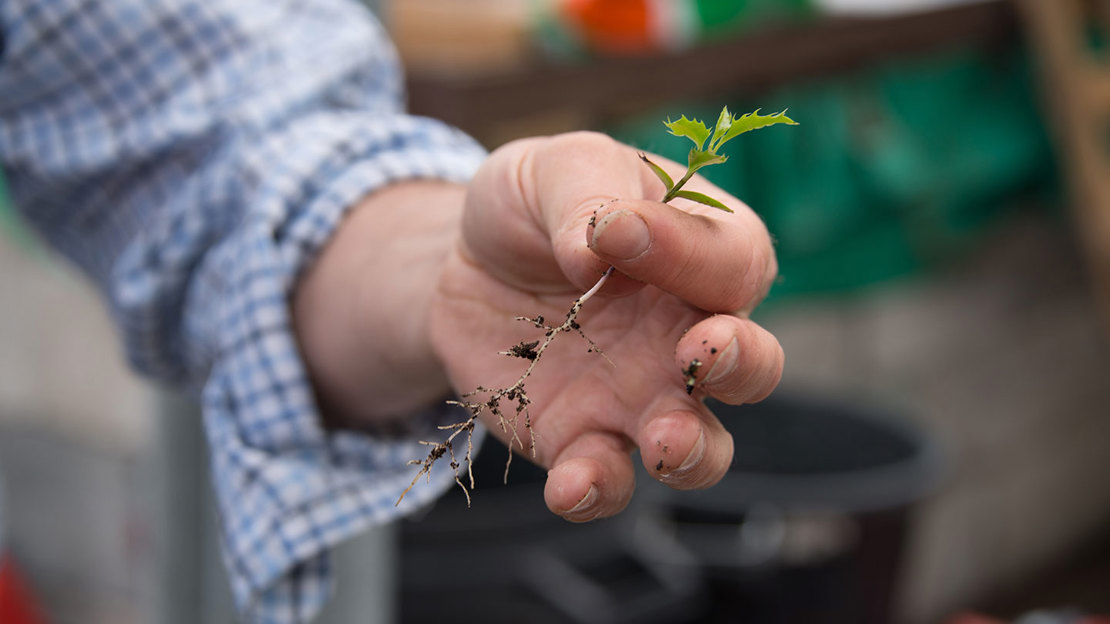
We’re committed to nurturing the next generation of tree champions, launching our first accredited training opportunity at the Young People’s Forest at Mead in Derbyshire. Twenty-one young people are now working towards a Level 2 Environment Leadership qualification through the Leadership Skills Foundation (the equivalent of a GCSE), with many expected to progress to Level 3 (A-level equivalent).
Our people team also piloted an online work experience session in collaboration with Speakers for Schools. Twenty-two young people took part in the session, gaining insight into careers in forestry and conservation.

Support us
We safeguard woodland across the UK. But we can’t do this without you. Your support is vital to save woods for future generations, protect the wildlife that calls them home, and restore them to their thriving best.
Protecting trees and woods
You can get involved in lots of ways, indoors and out. Check out our ideas and advice for plenty of ways to make a difference for woods and trees, now and for the future.
Protecting trees and woods
Together we can stand up for the environment and safeguard the UK's woodland heritage for our future.


