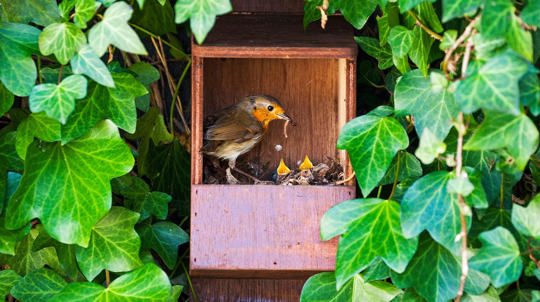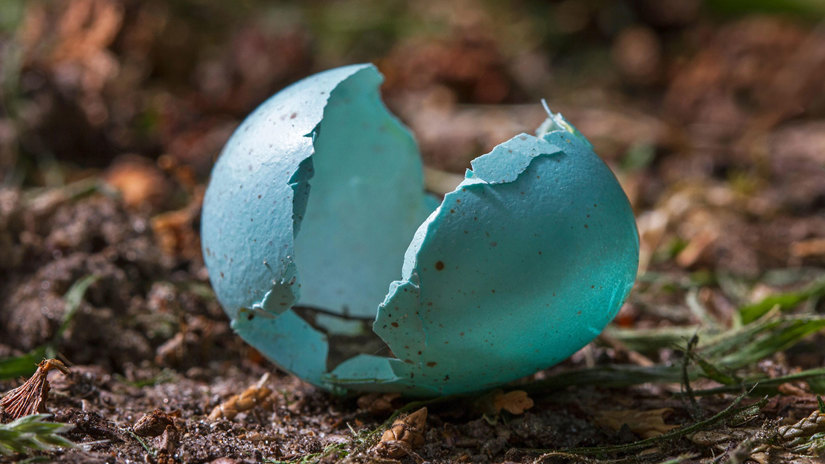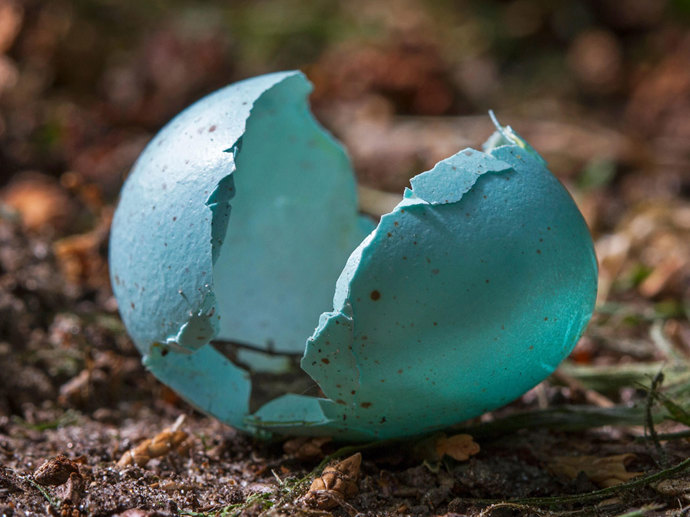
It is an offence to disturb nesting birds under the Wildlife & Countryside Act 1981. The breeding season is generally March to August, although some species begin nesting as early as February. Take care when investigating nests to ensure they're not in use, and avoid hedge cutting during this time.
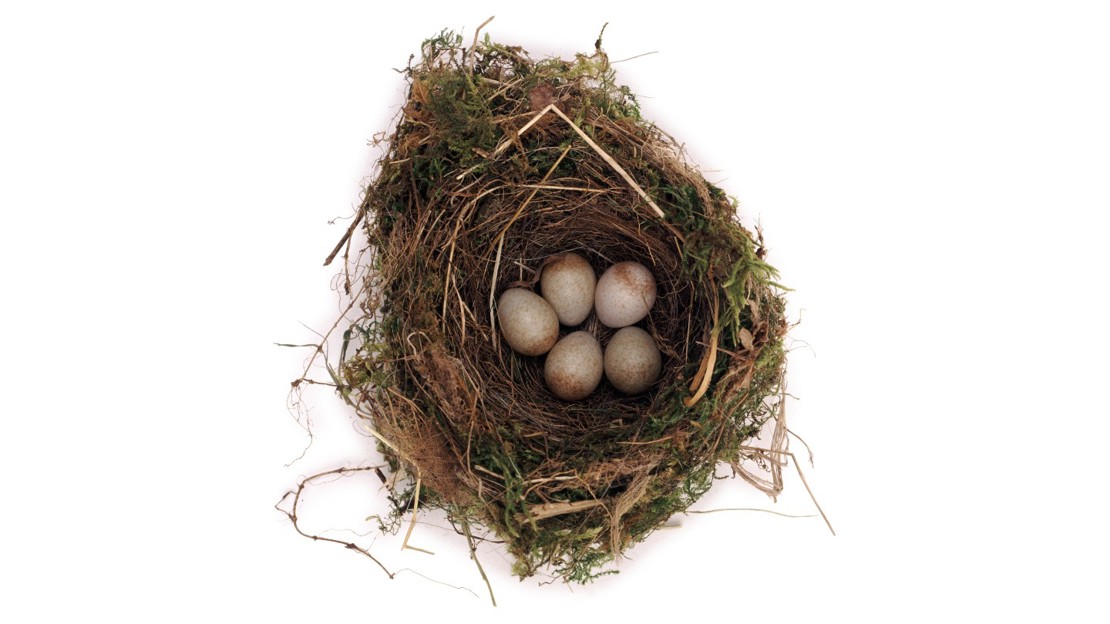
Bird nest identification: How to identify common UK bird nests
Digital Content Manager
With leaves gone from the trees and the breeding season over, winter can be an ideal time to look for signs of last year's baby boom.
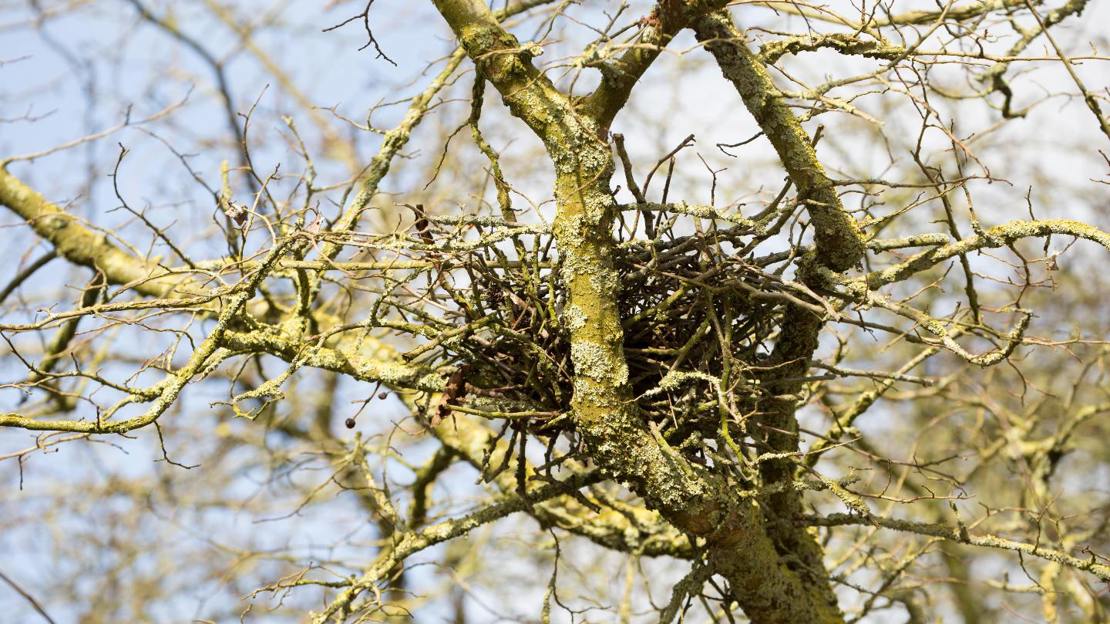
You may spot the dense outline of cup nests still sitting snugly in bare, forked branches. Strong winds can knock old nests from trees and shrubs. And gardeners trimming hedges before the new season starts often come across nests otherwise concealed by last year's growth.
But how can you tell which bird species built the nest left behind? Let's look at the clues that can help you identify who built a nest, what to do when you come across one, and the seven birds that may have raised young in a garden near you.
How to identify a bird's nest
If you’ve discovered a nest and want to know which bird built it, there are several clues to look out for.
-
Shape, appearance and size: bird nests vary widely, from wide to deep cup-shaped nests to flatter structures. Some may appear neat or messy and loosely assembled. Nests can also range from being very small to large.
-
Materials: each species has its own preference for building materials. Nests can be made from twigs, moss and even spider silk.
-
Location: where the nest is found can be a strong indicator of species. Is it in a hedge, shed or high up in tree branches? Don’t forget to check the ground too – over half of England’s more threatened bird species nest on or near it.
-
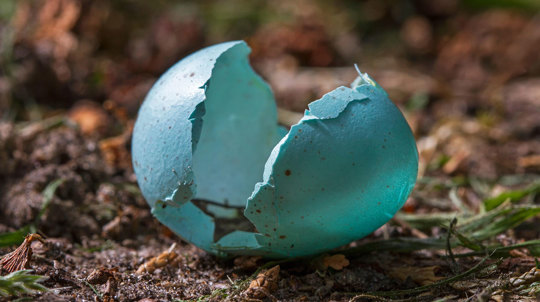
Old eggs or eggshells: if present, the colour, size or markings of eggs or eggshells may help identify the species.
Types of bird nest
Cup nests
The most common type of nest made by many garden birds. As the name suggests, these are shaped like a cup.
Platform nests
Large, flat nests built on the ground or high up in trees. These are typical of birds of prey like osprey.
Cavity and hole nests
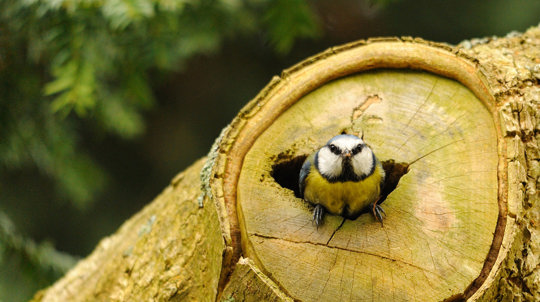
When birds build nests inside natural or artificial cavities and holes, such as tree holes. These nests offer protection from weather and predators.
Scrape and ground nests
Scrape nests are created by scraping a shallow hole in the ground. Ground nests are built directly on the ground and are often well camouflaged for protection against predators.
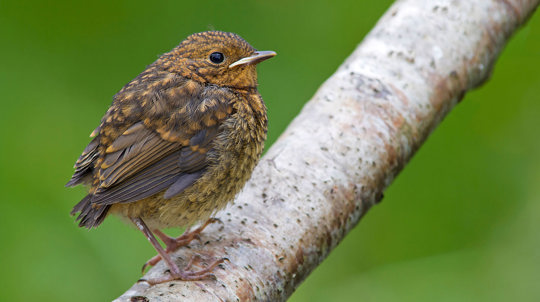
1. Robin (Erithacus rubecula)
Nest shape and appearance
Robin nests are thick and snug, with the mossy base often enlarged to fill the cavity or ledge the nest is built upon.
Materials
The base of the nest is constructed from leaves and moss, with the nest cup often lined with hair.
Likely location
Usually fairly low down among climbing plants or thick shrubs, often using a ledge as support. Sheds and other outbuildings are sometimes used, as well as open-fronted nest boxes.
Old eggs or eggshells
Pale and heavily freckled with tiny, reddish brown flecks, often concentrated towards the blunt end of the egg.
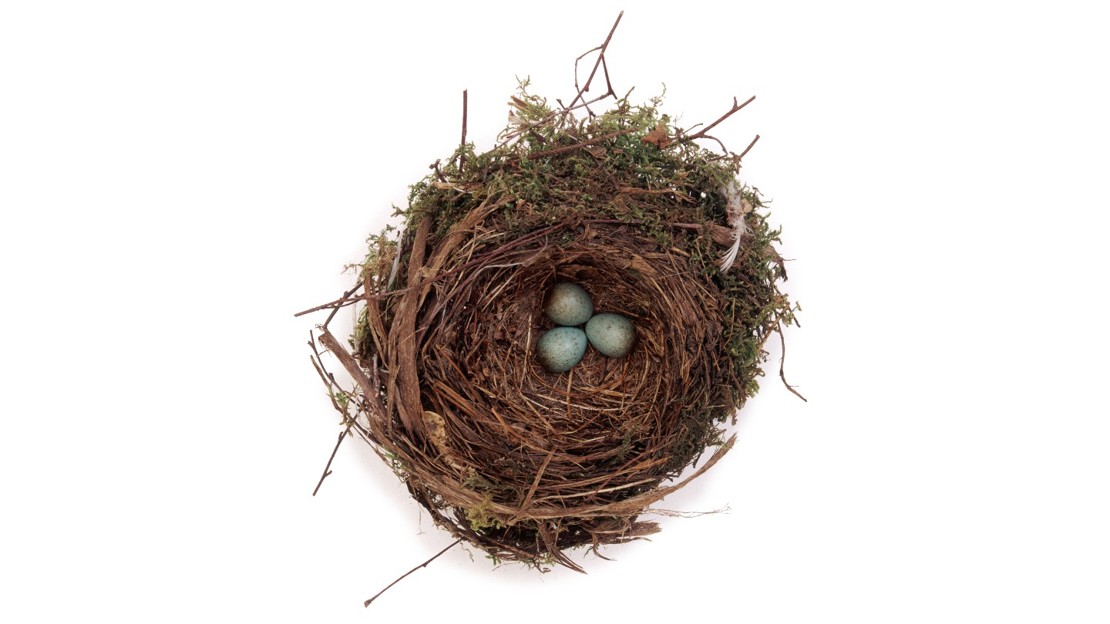
2. Blackbird (Turdus merula)
Nest shape and appearance
Blackbird nests are fairly large and heavy-looking, with wide cups to hold eggs and chicks.
Materials
Mainly woven from dried grasses but also moss and small twigs, and a grass lining in the nest cup.
Likely location
Commonly found in shrubs, hedges or climbing plants such as clematis, usually not much higher than head height.
Old eggs or eggshells
Pale greenish blue and freckled with reddish brown flecks.
Give nesting birds a helping hand
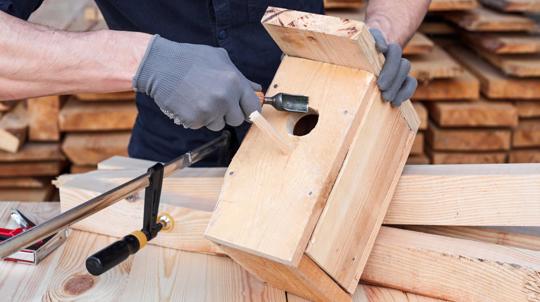
Add nest boxes to your garden to make that extra bit of space for growing families.
Buy from our shop3. Song thrush (Turdus philomelos)
Nest shape and appearance
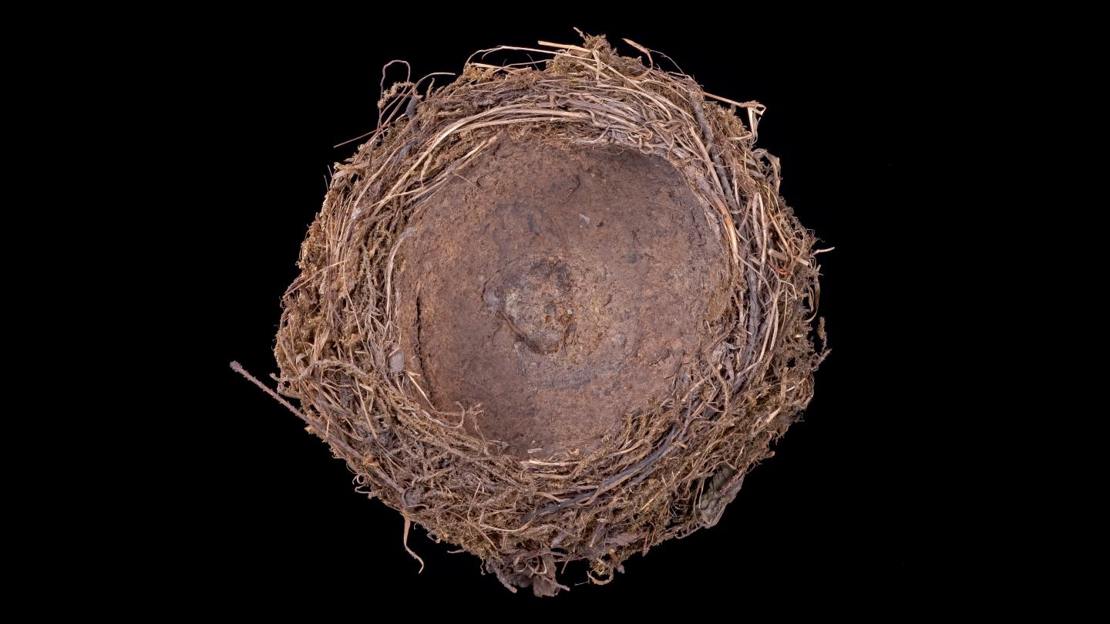
Song thrush nests are dense and sturdy looking, with a wide cup for eggs and chicks.
Materials
The base is built from grasses, twigs and moss, but the most distinctive feature is the lining of dried mud inside the nest cup.
Likely location
Typically found fairly low down in thick shrubs and hedges.
Old eggs or eggshells
Green-blue with dark speckles, which are more defined than on blackbird eggs.
4. Greenfinch (Chloris chloris)
Nest shape and appearance
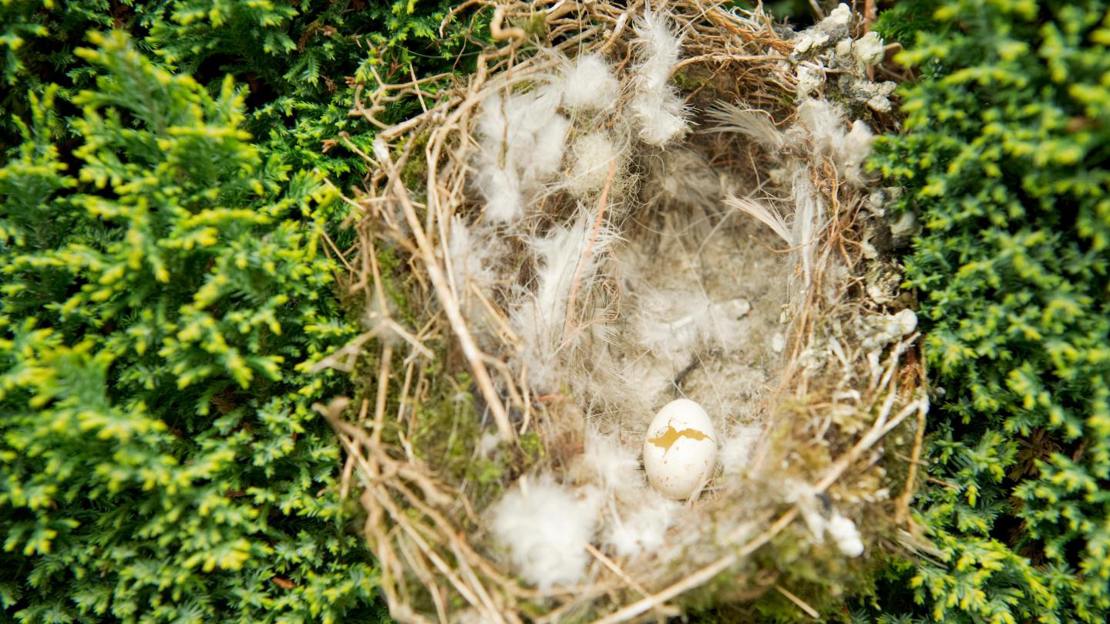
Greenfinch nests are fairly large and messy, sometimes with quite a loose construction.
Materials
Usually grass and moss with a lining of hair or feathers.
Likely location
Prefers to nest near other greenfinches, often in evergreen hedges or shrubs such as leylandii.
Old eggs or eggshells
Smooth and white, delicately flecked with dark markings.
5. Goldfinch (Carduelis carduelis)
Nest shape and appearance
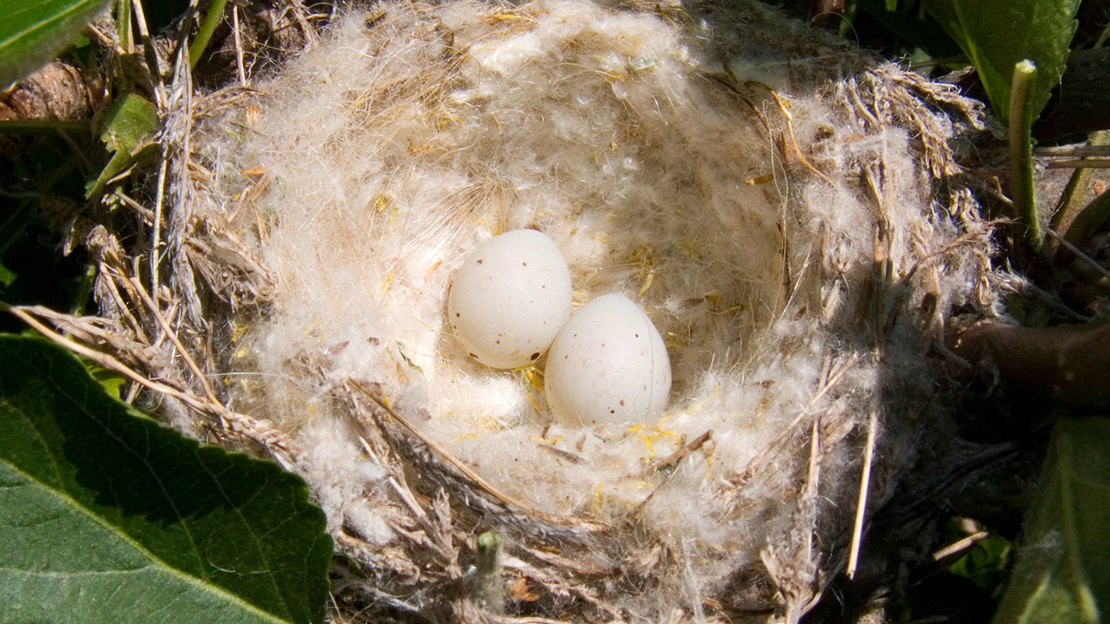
Goldfinch nests are neat and compact, with a deep cup to help keep eggs secure in high winds.
Materials
The mossy base is bound with grasses and spider silk. The nest cup is heavily packed with fluffy materials such as wool, feathers and downy thistle seeds.
Likely location
Often built in the fork of tree branches, usually fairly high among more slender, outer branches. They can be quite exposed to the elements!
Old eggs or eggshells
White with a small number of reddish-brown speckles.
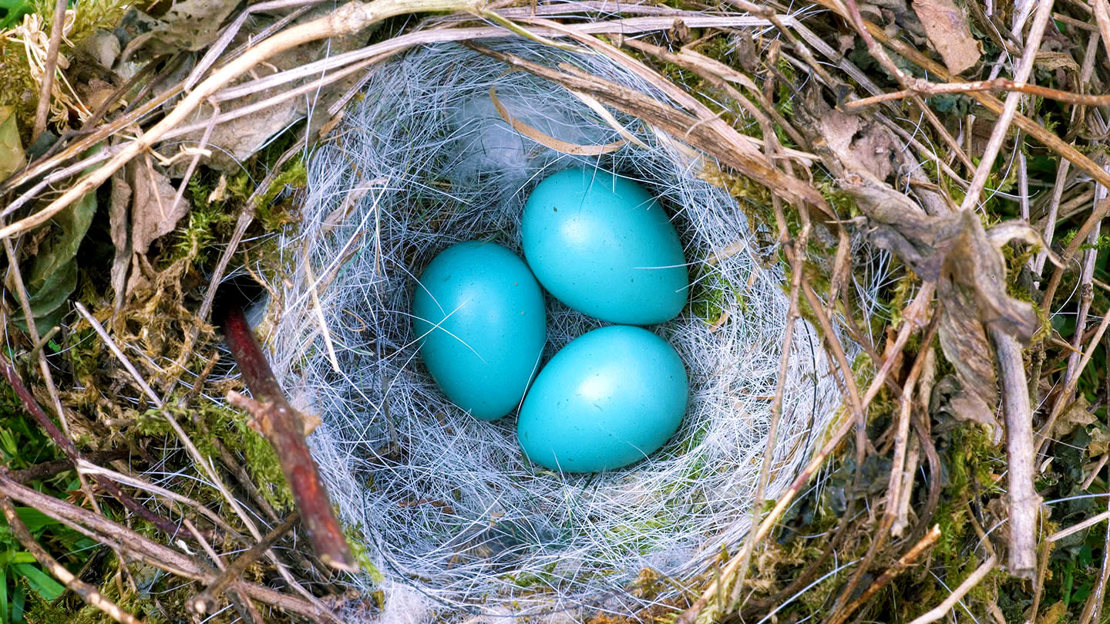
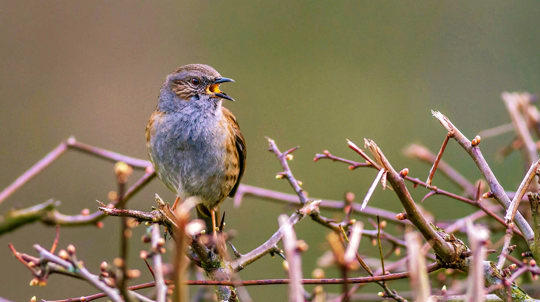
6. Dunnock (Prunella modularis)
Nest shape and appearance
Dunnock nests are somewhat flatter than other nests on our list with a shallower nest cup.
Materials
A foundation of twigs and moss, and lined with soft materials like moss, hair and feathers.
Likely location
Often well concealed and found low to the ground among thick bushes.
Old eggs or eggshells
Bright blue and lacking in spots or freckles.
7. Woodpigeon (Columba palumbus)
Nest shape and appearance
A messy and haphazard platform. Mostly flat with no lining. This loose construction often leaves gaps for light to filter through.
Materials
Large twigs and sticks.
Likely location
Often in the forks of tree branches, as though placed during a game of kerplunk.
Old eggs or eggshells
Smooth and white.
Frequently asked questions
When do birds nest in the UK?
There’s no fixed nesting season but most UK birds nest between March to September. Some species nest earlier or year round if conditions are suitable.
How to tell if a nest is active or old?
A nest is considered active if it is being built or contains eggs or young. Active nests are legally protected. To check for activity, observe the nest from a distance over a few days – nesting birds regularly leave and return.
Can I move a bird’s nest?
If the nest is active, no. It is illegal to deliberately take, damage or destroy a bird’s nest while it is in use or being built. It is also illegal to take or destroy the egg of any bird. These protections are set out in the Wildlife and Countryside Act (1981) in England, Scotland and Wales, and under the Wildlife (Northern Ireland) Order 1985 in Northern Ireland.
Even inactive nests should be left alone, as some birds reuse old nests or take over those built by other species.
What should I do if I have a bird’s nest in my garden?
The best thing to do is nothing. Active nests are legally protected and inactive nests are best left undisturbed.
More on birds and nesting
Identify wildlife
Wildlife is all around us, from sights and sounds to tracks and trails. Discover what's out there all year round with our identification guides.